#BoMorzeBistro & Cocktails
What we put on the table

Ingredients that know our name.

Neapolitan pizza is not a technique — it's a collection of decisions. Grain from which field. Tomato from which valley. Milk from which cow. Time that you cannot speed up.

We hold a simple belief: you cannot make good pizza out of bad ingredients. You can hide poor dough under good mozzarella; you can fake a poor tomato with basil and parmesan. But after the first bite, everything comes out.

That's why our menu starts with sourcing, not with the recipe. The flour comes from Padua. The tomatoes from a valley at the foot of Vesuvius. The mozzarella from Italian dairies in Campania. The olive oil from groves in Apulia. In this kitchen, four things we will never replace with anything inferior — and that's the whole philosophy.

Pillar 1 of 4

Le 5 Stagioni flour

From Padua, from a mill with 200 years of tradition. Type 00, soft wheat, minimum 13% protein.

Agugiaro & Figna Molini is an Italian family milling company with roots in the 19th century. Five generations of grinding grain, the same site, the same workshop. The Le 5 Stagioni brand — "Five Seasons" — is their premium line, designed specifically for master pizzaiolos. The flour comes from mills in Curtarolo (Padua) and Collecchio (Parma) — two of the oldest Italian milling centres.

We use a specific type: Pizza Napoletana 00. Chosen because it received the official certification of Associazione Verace Pizza Napoletana — the Neapolitan association that since 1984 has guarded what real pizza from Vesuvius is supposed to look like. The list of approved flours is short — ours has been on it from day one.

Technical specs: minimum 13% protein (the gluten has to support 72 hours of fermentation), water absorption 57%, dough stability minimum 13 minutes on the farinograph, W index = 300. In plain terms: you can ferment this flour long, very long — and that's its secret. The longer, the lighter and more digestible the dough.

Why this matters to you: pizza from cheaper flour (the domestic wheat kind, 10-11% protein) comes out of the oven elastic, but sits in your stomach for hours. Le 5 Stagioni after 72 hours of fermentation is as light to digest as plain bread — you can finish a whole one and head out lightly for a walk along the sea. For us, this isn't marketing — it's the reason we don't use anything else.

A sack arrives in Niechorze every week, in season sometimes every 4 days. We store it in a dry, dark place at 18 °C. Flour is alive — and feels everything that happens around it.
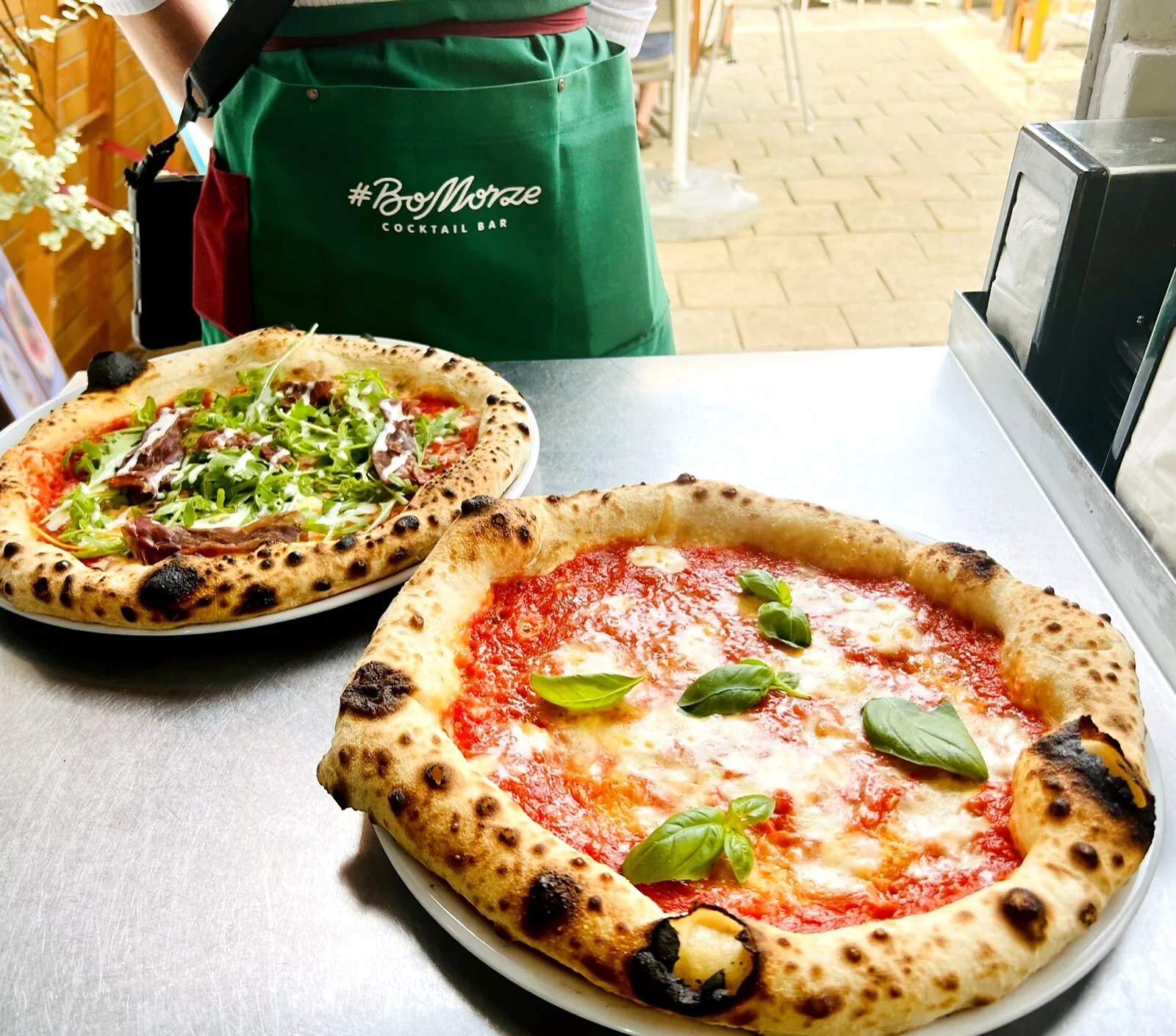
BoMorze Margherita pizza on Le 5 Stagioni dough — high cornicione, open-cell structure

Cornicione on Le 5 Stagioni dough · 13% protein, 65% hydration
Le 5 Stagioni logo — pizza flour by Agugiaro & Figna

Agugiaro & Figna Molini · Padua

Type00
OriginPadua, IT
Proteinmin. 13%
Pillar 2 of 4

San Marzano DOP tomato

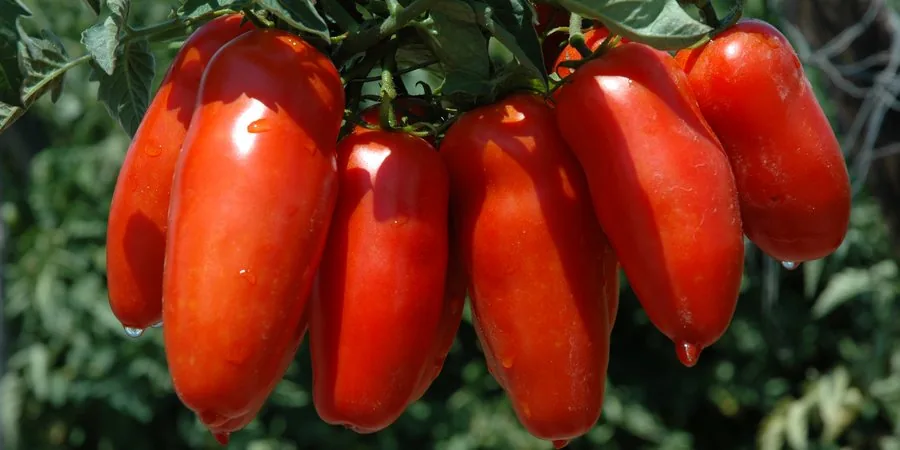
They grow in the shadow of Vesuvius. On ash from the 79 AD eruption. They no longer know how to grow any other way.

Pomodoro San Marzano dell'Agro Sarnese-Nocerino DOP — the full name from the European Union register. Denominazione di Origine Protetta, DOP status since 1996. Meaning: if the tomato doesn't come from this specific valley of the Sarno river (provinces of Salerno, Naples, Avellino), it doesn't get to be called San Marzano DOP. The rest are imitations.

The secret isn't in the seeds — it's in the soil. The Sarno valley lies at the foot of Vesuvius. The earth there is a mix of volcanic ash from the eruption of 79 AD (the one that buried Pompeii) and river sediments. Rich in potassium and phosphorus — and that's what gives the tomatoes the sweetness, low acidity and meatiness you won't find in a tomato grown anywhere else.

According to the European Union STG specification and the regulation — these are the only two varieties allowed in true Neapolitan pizza (the other is Pomodorino del Piennolo del Vesuvio DOP).

San Marzano DOP tomatoes growing on the vine — elongated, meaty, characteristic deep red, Sarno valley at the foot of Vesuvius

Pomodoro San Marzano DOP · on the vine in the Sarno valley

D.O.P.
Pomodoro
San Marzano

Strianese

Agro Sarnese-Nocerino · Campania

DOP statussince 1996
Soilvolcanic
VolcanoVesuvius
Traditionsince 1770
Pillar 3 of 4

72h-fermented dough

Three days of rest isn't a whim. It's the only way for pizza to be light on the stomach.

In the evening we mix dough for the day after tomorrow. Hydration 65%. Salt, yeast, water, flour — nothing more. After a brief knead it heads to a cold room at a steady temperature. There we slow the fermentation and let the enzymes break down starches and proteins into the components your stomach no longer has to break down itself.

After 72 hours we take it out, portion it into 250 g balls, and give it another 2 hours at room temperature. Only then do they land on the pizzaiolo's bench. Hence the pillow — a tall cornicione with large air bubbles. Hence the lightness — pizza that doesn't make you want to sleep.

72h
Fermentation
65%
Hydration
250g
Dough ball
Pizza on 72-hour dough — crisp cornicione with large air bubbles

Cornicione after 72-hour fermentation — air bubbles, light structure

Pillar 4 of 4

An oven that meets the napoletana requirements

Temperature in the Neapolitan style, even bake, zero compromise.

True pizza napoletana is not only about ingredients — it's about temperature. The Associazione Verace Pizza Napoletana states firmly: floor 430 °C, dome 485 °C, baking time 60–90 seconds. Otherwise — there is no discussion — it would be a different dish that just sounds similar.

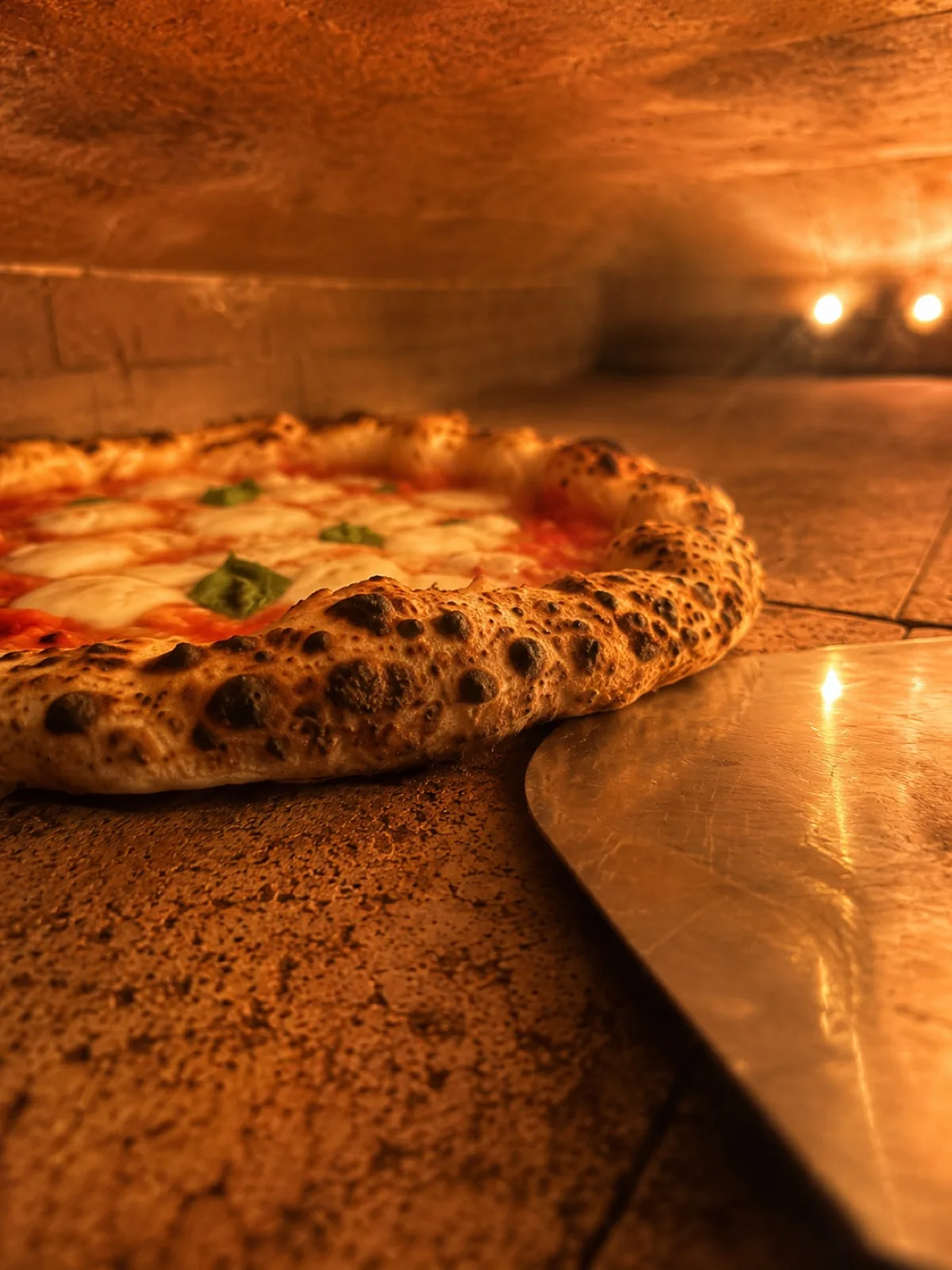
Our oven meets these requirements to the degree. At this temperature the dough behaves like roasted bread — water evaporates instantly, bubbles form, the heart stays soft and moist. Mozzarella melts but doesn't dry out. The cornicione rises, catches the characteristic dark spots — leoparding, as the Italians say — and smells of toasted yeast.

Every one of our pizzas lands on the oven floor once, on the peel once, on the plate once. We don't reheat anything. From dough ball to your table — 8 minutes on average.

Margherita pizza in the BoMorze oven — cornicione with leoparding bubbles, flames from the heaters on the right, firebrick floor, during the bake at 430°C
Cornicione in bubbles · leoparding
90 seconds at 430 °C
90s
Bake60–90s
Diameter30 cm
Floor430 °C
Dome485 °C
The rest of the plate

Everything else we use.

The four pillars are the foundation. But you can't build this kitchen on flour and tomato alone.

Fior di latte mozzarella

Fresh cow's-milk mozzarella, Italian, delivered 2× a week. Wet, plastic, perfect for baking.

Extra virgin olive oil

From groves in Apulia. Cold-pressed, acidity below 0.5%. We drizzle every pizza before it goes into the oven.

Fresh basil

We place the leaves at the last second — under the oven dome. The heat draws out the aroma without burning it.

Sea salt

Fine-grain Italian salt. No fluorides, no anti-caking agents. Clean taste — never dominant.

"Neapolitan pizza is a collection of decisions. Every good decision — from the flour, through the fermentation, to the oven temperature — adds up to one minute of pleasure."

— BoMorze kitchen · Niechorze

See it on the plate.

Full menu with prices, descriptions and tags (veg / spicy / Happy Hours).

See menu